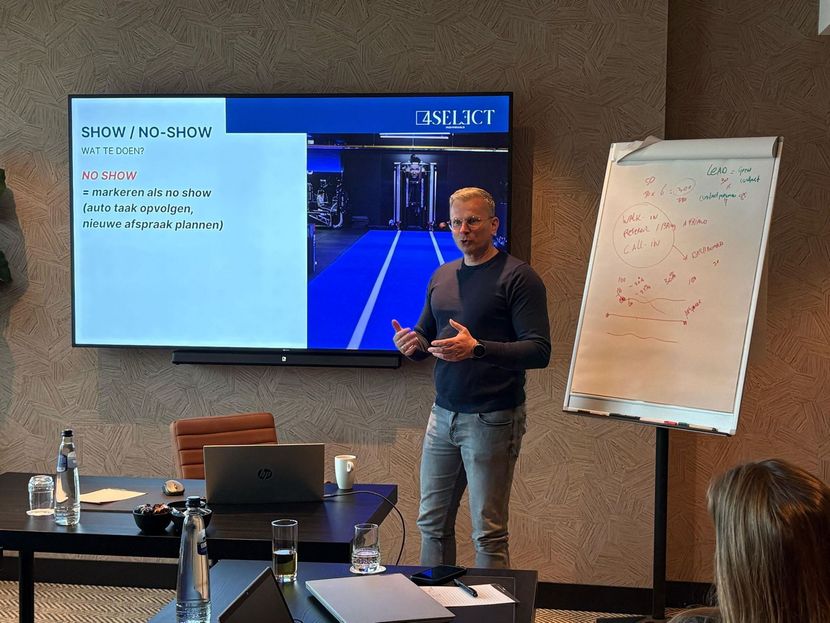
The workshop effect
A good workshop feels like progress. The room is energised, the role plays are fun and the team writes down a handful of phrases they want to try. Then Monday arrives. A phone rings during a busy class change, a walk-in wants a tour while the desk is short-staffed, and the new script is forgotten.
This is the workshop effect: knowledge goes up for a few days, behaviour does not change. Nobody was careless. The training simply had nowhere to live. There was no moment in the week where the new approach was expected, checked or practised again. Without that, even the best content fades, because people fall back on whatever is fastest under pressure.
A useful way to test your own club: ask three team members what they do when a lead says they will think about it. If you get three different answers, the training has not landed, and no amount of motivation will fix that. The gap is a missing agreed answer, not missing effort. Once the answer exists, it can be practised, reviewed and improved.
Training teaches skills, not a process
Many sales sessions focus on skills: asking better questions, handling objections, closing with confidence. These matter. But a skill needs a process to be used in. If nobody has defined what happens between the first lead and the first membership payment, each team member invents their own version.
One person calls back within minutes, another waits for the end of the shift. One offers a trial, another sends a price list. When results differ, you cannot tell whether the skill was weak or the process was missing. A defined sales process gives every skill a place: this is the step, this is the goal, this is what we say next.
Think of the process as a short map: first reply, first conversation, trial booking, trial reminder, trial visit, offer and follow-up. Each stop has an owner, a time limit and a goal. When something goes wrong, you can point to the stop where it happened. That makes feedback specific and removes the sense that sales is a matter of personality.
Speed and follow-up beat polish
Clubs often invest in closing technique while losing leads long before the conversation starts. A person who filled in a form on Tuesday evening and heard nothing until Thursday has already moved on, however skilled the closer is. Training cannot fix a gap that opens before anyone talks.
That is why we treat lead follow-up as part of the training topic, not a separate one. The team needs to know who answers, in which channel, and how fast. When the first reply is automated and quick, the human conversation starts warmer, and the skills you trained finally get a fair chance to show.
Speed also protects the work you have already done. Every lead came from somewhere, whether a paid campaign, a search result or a recommendation. When the reply is slow, that effort is wasted before the team gets a chance. Clubs that treat response time as a sales skill, not an admin detail, usually see the difference in how many leads reach a trial.
Coaching is where change happens
Adults change behaviour through repetition with feedback, not through one-off input. A short review of real conversations does more than a full day away from the floor. Listen to one call, look at one follow-up thread, ask what worked and what the person would try next time.
This is the idea behind coaching and enablement. The point is not to catch mistakes. It is to make improvement a normal part of the week, so that new habits get reinforced while they are still fragile. A manager who spends twenty focused minutes a week on this will see more change than any annual event can produce.
Be careful with how feedback is framed. If review sessions feel like inspections, people hide their weaker conversations and the process stops working. Start with something that went well, pick one thing to change, and agree when it will be checked again. Small, visible progress builds trust and keeps the habit going through busy periods and staff changes.
Rhythm turns training into a habit
Structure means rhythm. A fixed moment to review leads, a fixed moment each month to look at conversion, and a fixed moment each quarter to train on whatever the numbers show is weakest. That is the logic of quarterly sales training: short cycles, tied to real data, not a once-a-year spectacle.
The topics then come from the business instead of a generic curriculum. If trial-to-member conversion is low, you work on the trial conversation. If show-up rate is the issue, you work on confirmation and reminders. Training stops being an event and becomes the way the team keeps getting better.
Keep the quarterly session short and specific. Pick one weak step from the data, show two real examples, practise the alternative in pairs and agree what will be checked in the next review. Ending with a concrete commitment is what turns a good session into a change in behaviour.
You cannot coach what you cannot see
Most sales problems hide because the data is scattered. Leads come through the website, social media, WhatsApp and the front desk, and nobody sees one complete picture. When a manager cannot say how many leads were contacted, how fast, and how many became trials, coaching turns into opinion.
Putting lead intake in one system changes that. In Dialanta every lead, call, message and task sits in one place, and reporting shows speed-to-lead, show-up rate and trial-to-member conversion per person and per source. Your growth consultant uses those views to choose what the team practises next.
There is also a fairness benefit. When results are visible per step, a team member who is excellent at first conversations but weaker at follow-up gets help where it is needed, instead of a general verdict. Good people stay longer when they can see how they are improving, and your best practices become something the whole team can learn from.
What a structured approach looks like
In practice it is simple. Define the steps from lead to membership. Decide who owns each step and how quickly it must happen. Automate the first reply so no lead waits. Train the team on the conversations that follow, then review real examples and adjust every quarter.
None of this is exotic. It is just consistent. Clubs that work this way do not depend on one star salesperson, and they do not lose their method when someone leaves. If you want to see how it fits your club, start with our sales approach or look at how the way we grow connects all four pillars.